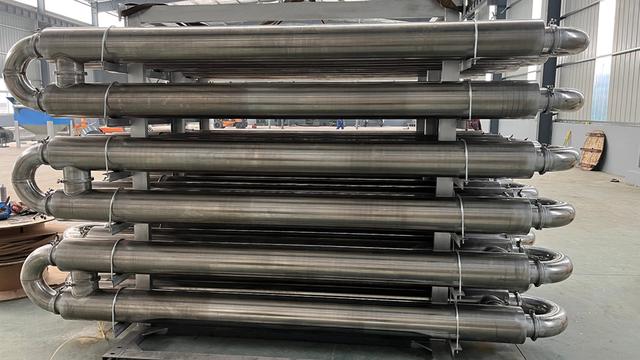
The shell side refers to the section of a shell-and-tube heat exchanger where fluid flows through the shell-side passages and exchanges heat with the tube-side medium. Compared with the tube side, the shell side features a more complex structure, including baffles, tie rods, bypass gaps and other components, making cleaning and daily maintenance more challenging. Establishing a systematic shell-side maintenance plan is critical to ensuring long-term, stable equipment operation.
Structural Characteristics of the Shell Side
The shell side consists of the shell, baffles, outer surfaces of the tube bundle, and shell-side inlet and outlet nozzles. Guided by baffles, the shell-side fluid follows an S-shaped flow path. This design increases flow velocity and turbulence to enhance overall heat transfer performance.
Multiple baffle types are available for different operating conditions. Single-segmental baffles are the most common, offering simple structure and reliable flow guidance. Double-segmental baffles effectively reduce pressure drop and are ideal for pressure-sensitive systems. Helical baffles eliminate flow dead zones and are especially suitable for high-viscosity media.
Common Shell-Side Issues and Root Causes
Various defects may occur during long-term operation, and clarifying their causes helps implement targeted maintenance.Fouling and blockage are the most frequent problems. Impurities in the medium, insufficient flow velocity, or dead zones around baffles accelerate scale deposition. Severe fouling weakens heat transfer efficiency, raises pressure drop, and increases pumping energy consumption.
Bypass leakage is easily overlooked. A gap of 5 to 10 millimeters exists between the tube bundle and the shell inner wall. Part of the fluid bypasses the tube bundle and flows directly toward the outlet, forming a short circuit that fails to participate in effective heat exchange and reduces thermal performance.
Flow-induced vibration damage frequently occurs in high-speed gas or liquid–two-phase conditions. Continuous fluid impact causes friction between tubes and baffle holes, eventually leading to tube rupture or baffle abrasion.
Corrosion also poses major risks. Chloride ions, sulfides, and high-temperature oxidation may cause pitting, perforation and leakage on the shell or tube bundle. Corrosion often progresses rapidly and requires timely inspection and treatment.
Core Shell-Side Maintenance Guidelines
Cleaning methods shall be selected according to structural features and fouling severity.Chemical cleaning applies to mild shell-side fouling. Dedicated chemicals are chosen based on deposit composition — acid cleaning for carbonate scale and alkaline cleaning for oil-based fouling. Circulating cleaning must be followed by thorough neutralization and passivation.
High-pressure water jet cleaning is suitable for moderate fouling. Through reserved cleaning ports or disassembled channel boxes, high-pressure lances are inserted to flush tube outer walls and baffles, with operating pressure generally controlled within 50 to 100 MPa.
For floating head heat exchangers, the entire tube bundle can be extracted. Full mechanical cleaning with brushes or high-pressure water guns thoroughly removes contaminants from the shell interior and tube surfaces, representing the most reliable cleaning solution.
Baffle inspection is an essential maintenance item. Long-term operation may lead to enlarged baffle holes caused by abrasion, thinning plate thickness from corrosion or erosion, and structural deformation or detachment under high temperature and vibration. Damaged baffles shall be repaired or replaced in a timely manner.
Bypass control measures effectively improve heat transfer. Sealing strips installed along the outer edge of the tube bundle block peripheral gaps, forcing fluid to fully pass through the tube bundle. Optimized baffle configurations, such as double-segmental or helical designs, reduce dead zones and homogenize shell-side flow distribution.
Comprehensive corrosion protection is required. Select corrosion-resistant materials including stainless steel, duplex steel and titanium alloys for aggressive media. Install sacrificial anodes such as zinc blocks inside the shell to mitigate electrochemical corrosion. For low-temperature non-food-grade scenarios, anti-corrosion coating on the shell inner wall provides a cost-effective protective solution.
Recommended Shell-Side Maintenance Cycles
· Daily: Monitor inlet and outlet pressure and temperature to detect abnormal fluctuations.
· Every 3–12 months: Perform shell-side cleaning according to actual fouling conditions.
· Every 1–2 years: Inspect baffle integrity along with routine equipment overhaul.
· Every 2 years: Conduct shell thickness measurement to assess corrosion loss.
· Every 3–5 years or after major maintenance: Complete overall pressure testing to eliminate hidden leakage risks.
Shell-side abnormalities will affect the overall operating state of the heat exchanger. Standardized and systematic maintenance keeps the equipment operating efficiently and stably over extended service cycles.
Shanghai Jiangwan Chemical Equipment Co., Ltd. specializes in the research and manufacturing of non-standard equipment such as reaction kettles, heat exchangers, stainless steel reactors, tower vessels, modular units, freeze-dryers and cold traps. The company holds ASME U-stamp, EU PED, Korean Kosha and EAC certification. Its products serve chemical, petrochemical, fine chemical, pharmaceutical, food, light industry and environmental protection industries. Customized high-matching process equipment solutions are available for diverse working conditions. Please contact us for professional technical support and consultation.