Air storage tanks are critical equipment in compressed air systems, and their installation quality directly affects the system’s safe operation and service life. During installation, certain details may seem insignificant, yet if overlooked, they can trigger potential safety hazards or cause operational inconveniences in later use. This article focuses on these easily neglected details to help users avoid common installation defects.
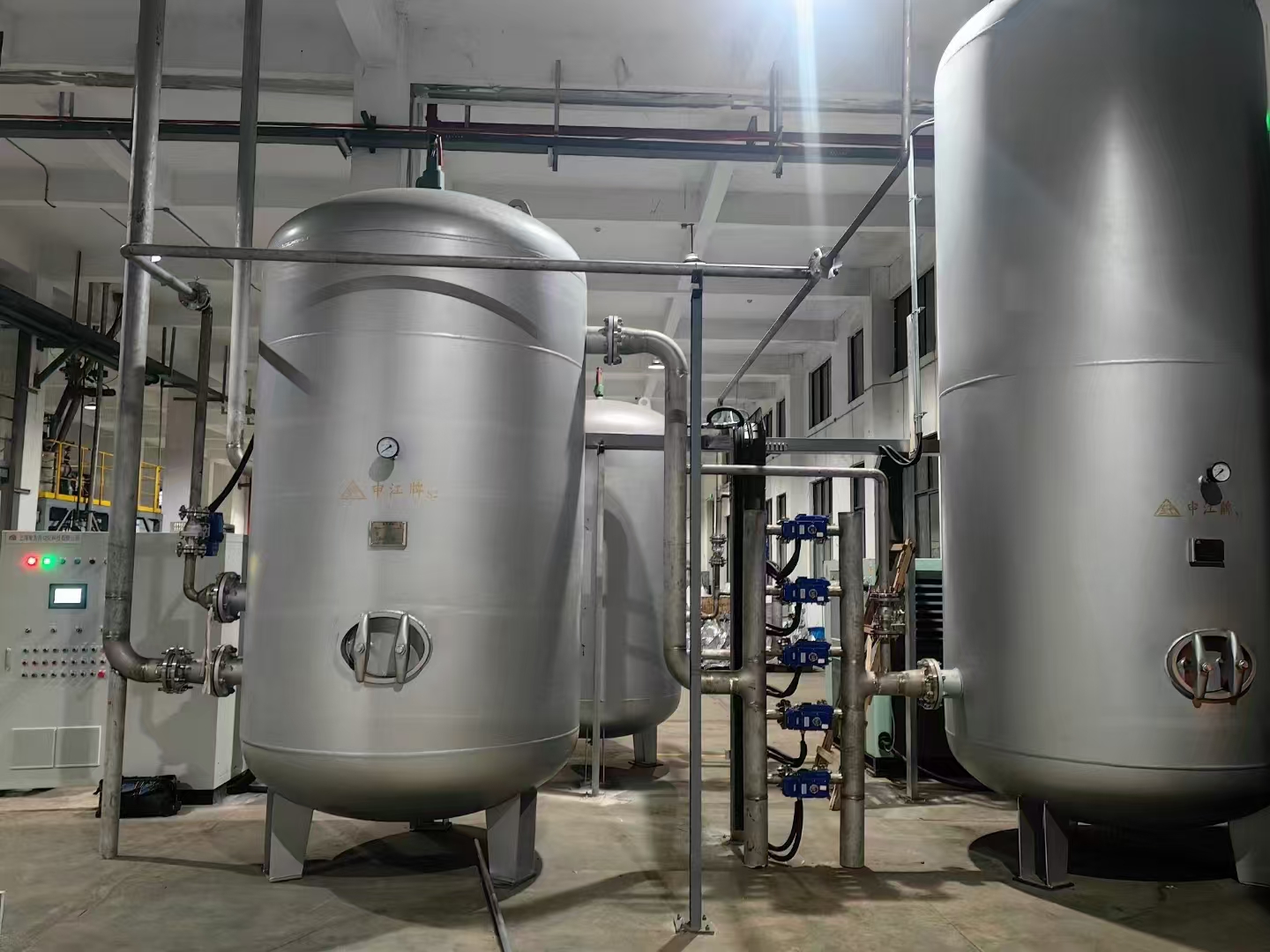
Preparation before installation often determines the overall construction efficiency, while many key details are frequently ignored. During unpacking inspection, most personnel only check whether the tank body is damaged, neglecting the attached technical documents. In fact, product quality certificates, supervision inspection reports, and as�built drawings are not only technical archives but also mandatory materials for applying for equipment operation registration. Missing these documents will result in illegal and non-compliant operation.
The reserved positions of anchor bolts must be carefully verified. If the prefabricated bolt holes on the foundation fail to match the mounting holes on the tank base, on-site modification will be extremely troublesome. Therefore, before hoisting and positioning, it is necessary to measure the actual hole spacing and confirm the matching accuracy with foundation bolts. For regions with seismic design requirements, special attention shall be paid to the embedding depth of anchor bolts and grouting quality; insufficient depth or loose grouting may cause bolt pull-out under vibration.
Foundation acceptance is another easily underestimated step. Many operators only focus on foundation dimensions while ignoring structural strength. The concrete foundation must reach more than 70% of its designed strength to bear the load of the tank; otherwise, uneven foundation settlement and tank inclination may occur. Especially for water-bearing storage tanks, the total weight in the fully loaded state is far heavier than the empty tank, and the foundation must withstand such loads stably.
Strict control shall be implemented for foundation flatness. Excessive deviation will lead to tank inclination after installation, causing unbalanced stress and affecting structural safety, rather than only appearance defects. Generally, the horizontal deviation of the foundation surface shall not exceed 5 mm per meter.
Details during hoisting and positioning also require high attention. Lifting points must comply with design specifications; random selection of lifting points will cause local overstress and permanent deformation of the tank shell. For insulated storage tanks, protective measures must be taken to prevent the insulation layer from being crushed or damaged by steel wire ropes. After positioning, anchor bolts shall be tightened in a timely manner to prevent tipping. This requirement is particularly critical for outdoor installations, as sudden strong winds may blow over unfixed empty tanks.
Pipeline connection is the core part of installation and contains the largest number of hidden details. The routing of the air inlet pipeline shall be reasonably planned. If air enters the tank from the bottom, oil and condensed water inside the pipeline will flow backward into the air compressor. The correct method is to adopt top or side inlet, and install an upward bend near the tank to block backflow.
The air outlet pipeline shall be led out from the upper part of the tank, or a water collection device shall be installed on horizontal pipe sections to prevent condensed moisture from entering downstream equipment with airflow. Independent pipeline supports are often omitted in on-site construction. It is forbidden to bear the weight of pipelines through tank nozzles, which will induce excessive additional stress and long-term fatigue damage. Flexible connectors shall be adopted between pipelines and the tank for stress buffering.
The installation quality of drainage devices directly affects daily water removal efficiency. The drainage outlet is designed at the lowest point of the tank. If the tank is installed unleveled, the outlet will no longer be at the lowest position, resulting in incomplete water accumulation discharge and accelerated internal corrosion.
For automatic drain valves, the mounting height shall facilitate daily maintenance, and anti-freezing measures shall be reserved for winter operation. In cold regions, heat tracing or thermal insulation must be equipped for exposed drainage pipes and valves to avoid freezing blockage. The outlet of drainage pipelines shall be guided to a safe area to prevent scald accidents or ground damage caused by high-temperature condensed water.
The mounting details of safety accessories determine the reliability of overpressure protection. Before installation, confirm that the set pressure of the safety valve is consistent with the tank’s design pressure, which is clearly marked on the nameplate. Using safety valves with mismatched pressure grades will completely fail the overpressure protection function.
No globe valve is allowed between the safety valve and the tank body. If a switching valve is unavoidable, an interlocked dual-valve structure must be adopted and sealed in a normally open state with lead seals. Before installation, pressure gauges must be confirmed within the valid verification period. The red warning line marking the maximum working pressure shall be calibrated according to actual operating conditions after installation, instead of arbitrary marking. The cock valve under the pressure gauge shall remain fully open and sealed to prevent accidental closure.
Grounding system specifications are widely overlooked. As special pressure vessels, air storage tanks require reliable static grounding to eliminate electric spark risks caused by charge accumulation. Simply connecting the tank and grounding pole with ordinary wires fails to meet standards. Strict regulations apply to the material, cross-sectional area and anti-corrosion treatment of grounding conductors.
Copper conductors with a cross-sectional area of no less than 16 mm² shall be used, connected to dedicated grounding terminals on the tank instead of random welding. The grounding resistance must be tested and controlled within 4 Ω, with test records filed for future inspection. Equipotential bonding is required for multiple adjacent equipment to eliminate potential difference risks.
Markings and warning signs are also indispensable. After installation, the official nameplate marked with design pressure, design temperature, volume and other core parameters shall be posted in a visible position. Safety valves shall be attached with warning signs indicating cracking pressure and the next inspection date. A red limit line shall be marked at the maximum working pressure on pressure gauges. For automatically controlled tanks, clear operation guidelines and hazard warning signs shall be posted on control cabinets. Outdoor tanks shall be equipped with anti-collision signs to avoid vehicle impact damage.
Inspection and registration are statutory post-installation procedures that are often ignored. As special equipment, air storage tanks must complete registration at local special equipment safety supervision departments before operation. Putting equipment into use without official registration violates relevant safety regulations.
The initial inspection includes visual inspection, safety accessory calibration and overall pressure resistance testing. Qualified inspection results are a prerequisite for official operation, and all test reports shall be properly filed for periodic re-inspection.
Daily condition observation in the early operation stage is essential. Within the first few days after commissioning, monitor abnormal noise, joint tightness, automatic drainage performance and pressure fluctuation range. Timely discovery of hidden installation defects can prevent minor problems from evolving into major equipment failures.
In conclusion, the overall installation quality of air storage tanks depends not only on standardized main processes, but also on precise control of trivial details. Paying attention to every hidden detail ensures stable installation, reliable operation and long-term safety. Those seemingly minor details are the core guarantee for the long-cycle and safe operation of compressed air systems.