The air compressor air tank is an essential component of the compressed air system. It functions to store compressed air, stabilize system pressure, separate oil and water, and buffer pulsating airflow. The installation quality of the air tank directly affects the safe operation and service life of the entire compressed air system. Understanding installation specifications and avoiding common misunderstandings is of great significance for ensuring equipment safety and improving system efficiency.
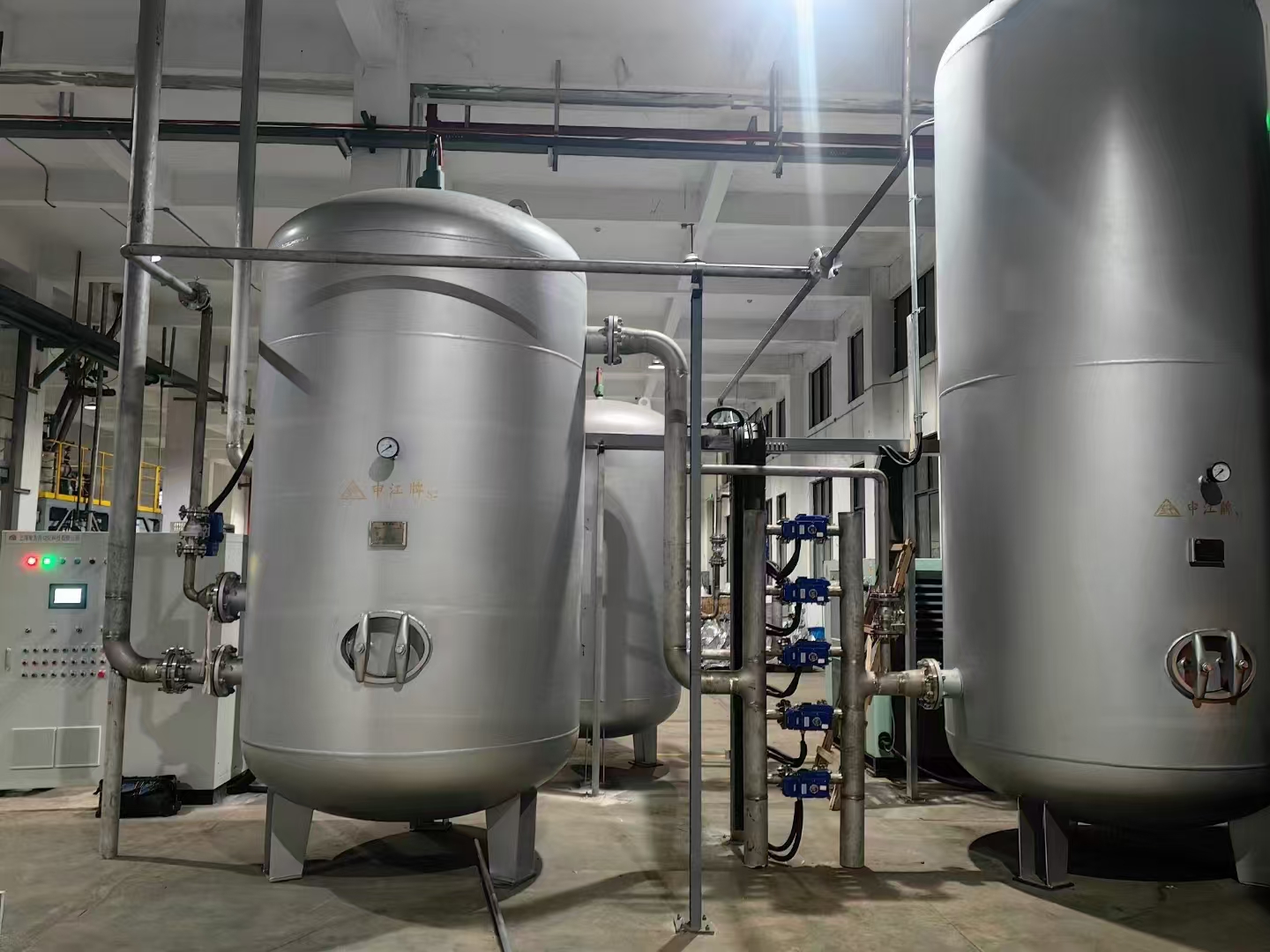
The selection of the installation location is the first and most fundamental step of air tank installation. The air tank shall be installed in a well-ventilated, dry area free of corrosive gases and severe vibration. Adequate ventilation prevents the accumulation of oil and gas that could form explosive mixtures, while also meeting equipment heat dissipation requirements. A dry environment prevents external tank corrosion; for outdoor installed tanks, rainproof and sun protection measures must be arranged.
An inspection passage of no less than 0.8 meters shall be reserved between the air tank and walls, and a distance of more than 1 meter shall be maintained between adjacent equipment to facilitate daily inspection and maintenance. The tank foundation must be solid and flat to bear the total weight of the fully water-filled tank. Generally, the concrete floor thickness shall not be less than 150 mm, or independent concrete foundation piers shall be constructed. For large-capacity air tanks, anti-vibration measures shall be incorporated into foundation design.
The installation orientation of the air tank also follows strict requirements, and the tank must be kept vertical with the inclination within the specified limit. Structural strength calculations for air tanks are based on vertical installation. Excessive inclination causes uneven stress distribution and local overstress on the tank shell. Meanwhile, a sewage outlet is arranged at the tank bottom; tilting will prevent the outlet from staying at the lowest point, resulting in incomplete drainage of condensed water and accelerated internal corrosion.
Pipeline connection is a critical link in installation, closely related to system operational safety and efficiency. The air inlet shall be arranged on the upper part of the tank, and the air outlet on the lower part. This layout forms a reasonable airflow path by gravity, promoting the separation and sedimentation of oil and water. The air intake pipeline shall branch from the upper section of the main pipe to prevent backflow of condensed oil and water.
Flexible joints or bellows shall be adopted for pipeline connection to reduce vibration transmission and thermal stress. The weight of pipelines shall not be borne by the tank shell, and independent pipeline supports are mandatory. Valves shall be installed at accessible positions; in particular, drain valves shall be set at a convenient height for regular sewage discharge.
Correct installation of safety accessories serves as a core guarantee for safe tank operation. The safety valve shall be mounted at the top overpressure-prone position of the tank, with no stop valve installed upstream. If switching valves are necessary, an interlocked dual-valve structure must be adopted to ensure at least one safety valve remains operational at all times. The discharge port of the safety valve shall face a safe area, and a discharge pipe shall be routed outdoors if required.
Pressure gauges shall be installed in visible positions with a dial diameter of no less than 100 mm, and a red warning line shall be marked at the maximum working pressure. Siphon pipes and stop valves shall be installed between the pressure gauge and the tank for convenient replacement and calibration. Liquid level gauges or automatic drainers shall be arranged at the tank bottom with easy access for inspection and maintenance. Anti-freezing protection for automatic drainers is required to prevent failure caused by icing in winter.
Grounding protection is an indispensable safety measure. As a pressure vessel, the air tank may accumulate static electricity due to airflow friction in compressed air systems. Undischarged static electricity can generate electric sparks and trigger fire or explosion hazards. Reliable grounding connection is mandatory for air tanks, with the grounding resistance limited to 4 ohms or less. Copper conductors shall be used for grounding wires, firmly connected to the tank, and grounding conditions shall be inspected regularly.
Several common installation misunderstandings need to be strictly avoided.
Blind pursuit of larger tank capacitySome users believe that a larger air tank delivers greater gas storage capacity and more stable system operation. In fact, the tank volume shall be reasonably matched with the compressor displacement and air consumption of terminal equipment. Excessively large capacity leads to higher costs, wasted space, prolonged air residence time, increased condensed water, and deteriorated air quality. Undersized tanks fail to provide effective buffering and pressure stabilization. The recommended tank volume is 1/10 to 1/3 of the compressor’s per-minute displacement, adjusted according to actual air consumption fluctuations.
Ignoring the importance of sewage discharge devicesImproperly selected small-bore drain valves or unreasonable installation positions hinder daily sewage operation. Worse still, some users omit automatic drainers and rely on manual drainage, which is often delayed or neglected. Severe water accumulation inside the tank accelerates corrosion and shortens service life. The standard practice is to equip qualified automatic drainers and inspect their operating status periodically.
Unauthorized adjustment of safety valve set pressureTo meet high-pressure air demand, individual users privately raise the cracking pressure of safety valves or even lock them completely. This extremely dangerous operation may cause overpressure and tank explosion. The set pressure of safety valves must match the tank’s design pressure with no unauthorized modification. If working pressure adjustment is necessary, professional structural verification is required, and matched safety valves and updated registration formalities must be completed.
Neglecting thermal expansion compensation for pipelinesHigh-temperature compressed air causes pipeline expansion and contraction. Without effective compensation measures, long-term cyclic thermal stress will act on tank nozzles and eventually lead to fatigue cracking. Expansion joints or bent pipes shall be installed on connecting pipelines to absorb thermal deformation.
Improper service conditions beyond design scopeAir tanks are designed for specified pressure and medium conditions. Reusing air compressor tanks for other gas storage or arbitrarily changing operating pressures poses major safety risks. Any modification of service conditions must be reviewed and approved by the original design institute or professional technical institutions.
Post-installation inspection and trial operation are equally essential. A comprehensive inspection shall be conducted to confirm firm connections, flexible valve operation, and complete and effective safety accessories. During trial operation, pressure shall be increased slowly to check for abnormal noise and leakage. After reaching the rated working pressure, verify that the safety valve trips at the calibrated pressure. Formal operation can only be started after all indicators are confirmed normal.
The installation quality of air tanks determines their operational safety and service life. It is essential to strictly comply with relevant specifications and eliminate common misunderstandings. Only through standardized installation, regulated operation, and periodic inspection can air tanks maintain stable performance and provide reliable safety guarantee for the entire compressed air system.