
Although both ambient-temperature storage tanks and low-temperature storage tanks belong to storage vessels, significant differences in operating temperatures lead to distinct discrepancies in design philosophy, material selection, structural configuration and safety requirements. The design standards followed by each also have different focuses. Understanding these differences helps technicians better design and manufacture container-type equipment.

Ambient-temperature storage tanks generally refer to vessels with an operating temperature ranging from -20 °C to 150 °C, covering the vast majority of industrial storage scenarios. Their design mainly complies with specifications including Design Code for Vertical Cylindrical Steel Welded Storage Tanks, Code for Design of Tank Farms in Petrochemical Storage and Transportation Systems, and standards for steel pressure vessels. These codes focus on strength calculation, stability analysis and anti-corrosion design. Since material properties remain stable at ambient temperature, there is no risk of low-temperature brittle fracture.
The design temperature of low-temperature storage tanks is usually below -20 °C, and can reach as low as -196 °C or even lower. For example, LNG storage tanks operate at -162 °C, while liquid hydrogen storage tanks work at -253 °C. Low-temperature tank design is governed by standards such as Technical Specifications for Low-temperature Pressure Vessels, Stationary Vacuum-Insulated Cryogenic Pressure Vessels, and Design and Construction of Liquefied Natural Gas Facilities. These regulations place special emphasis on material low-temperature toughness, thermal insulation performance and thermal stress control, because the mechanical properties of materials undergo fundamental changes under cryogenic conditions.
Differences in Material Selection
Ambient-temperature and low-temperature tanks adopt completely different material selection logic.
For ambient-temperature tanks, selection focuses on structural strength, cost efficiency and conventional corrosion resistance. Carbon steel and low-alloy steel are the most widely used materials. Carbon steel exhibits favorable plasticity and toughness at normal temperature, meeting the demands of most working conditions.
For low-temperature tanks, low-temperature toughness becomes the primary consideration to prevent brittle fracture. As temperature drops, carbon steel transitions from a ductile state to a brittle state, determined by chemical composition and microstructure. Thus, low-temperature tanks must adopt materials that maintain stable toughness at the minimum operating temperature, such as austenitic stainless steel, nickel-alloy steel and aluminum alloy.
For instance, 9% nickel steel, commonly used for LNG tanks, retains excellent toughness at -196 °C, benefited from its unique chemical composition and professional heat treatment technology.
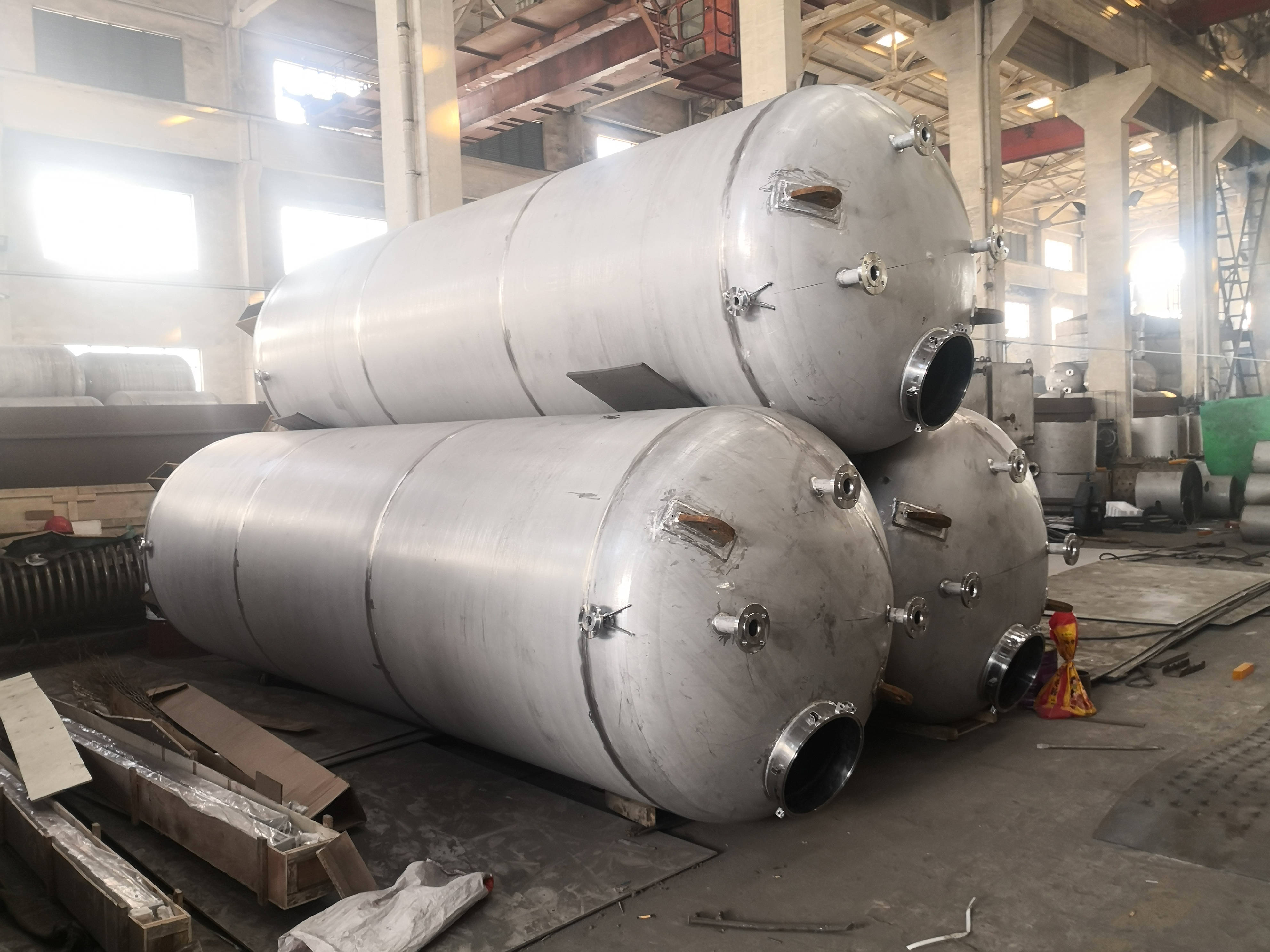
Differences in Structural Design
Structural design indicators also vary greatly between the two tank types.
Ambient-temperature tanks are mainly designed to withstand hydrostatic pressure, wind load and seismic load. Shell thickness is determined by stress calculation, and large-scale tanks adopt a variable-thickness structure to optimize material consumption. The tank roof can be a fixed roof, floating roof or internal floating roof, selected according to the volatility of stored media.
Low-temperature tanks normally adopt a double-wall structure. The inner tank bears the pressure and cold energy of cryogenic media, while the outer tank protects the insulation layer and resists external loads. Thermal insulation materials such as perlite, glass wool or multi-layer composite insulation are filled between the inner and outer walls to reduce external heat intrusion. For large low-temperature tanks, thermal stress caused by cold contraction must be considered, and expansion compensation devices are installed in structural and piping design.
Thermal Insulation Design
Thermal insulation is an exclusive core requirement for low-temperature tanks, while ambient-temperature tanks generally do not need insulation design.
Three mainstream insulation methods are applied in low-temperature storage tanks:
1. Bulk insulation: The most common solution. Perlite powder is filled in the interlayer, with vacuum pumping or dry inert gas filling. The insulation thickness is determined by medium temperature and allowable daily evaporation rate.
2. Vacuum insulation: Suitable for small and medium-sized cryogenic tanks. High vacuum is created in the interlayer to reduce gas heat conduction, delivering superior insulation performance with continuous vacuum maintenance required.
3. Multi-layer insulation: Alternating reflective shields and spacer materials are arranged in the vacuum interlayer. It provides the best insulation effect with higher cost, mainly used for ultra-low-temperature media such as liquid hydrogen and liquid helium.
Differences in Safety Design
The safety design priorities are different for the two types of tanks.
Ambient-temperature tanks focus on fire and explosion prevention, leakage control, lightning protection and static conduction. For flammable media storage, breathing valves, flame arresters and emergency pressure relief devices are equipped to prevent overpressure and flame intrusion. Dikes are constructed in tank areas to restrict the diffusion of leaked liquid.
The safety system of low-temperature tanks is far more complex. In addition to conventional safety measures, unique cryogenic risks must be addressed. Once leaked, low-temperature media vaporize rapidly and form vapor clouds, leading to suffocation or explosion hazards. Therefore, low-temperature tanks are equipped with multi-level protection devices, including emergency shut-off valves, pressure relief valves, vacuum breakers and gas detection and alarm systems. Large cryogenic tanks are required to ensure the inner tank can contain leaked media and the outer tank can resist short-term low-temperature medium contact without structural failure.
Manufacturing and Inspection Requirements
Ambient-temperature tanks are manufactured and inspected in accordance with general pressure vessel and storage tank standards. Requirements for welding procedures and non-destructive testing are relatively flexible, and inspection grades are classified based on the hazard level of stored media.
Low-temperature tanks adopt much stricter manufacturing and inspection specifications. 100% radiographic testing or ultrasonic testing is mandatory for all pressure-bearing welds, because tiny defects may expand and induce brittle fracture under low temperature. Welding of cryogenic materials requires strict procedure qualification and specialized welder training. Heat input and interpass temperature are precisely controlled during welding. Post-weld heat treatment is compulsory for nickel-alloy steel to eliminate residual welding stress.
Temperature Gradient and Material Matching
As temperature decreases, design standards become increasingly stringent:
· Above -20 °C: Conventional carbon steel is acceptable;
· -20 °C ~ -50 °C: Low-temperature carbon steel such as 16MnDR is required;
· -50 °C ~ -100 °C: Nickel-alloy steel such as 09MnNiDR shall be adopted;
· Below -100 °C: Special materials including austenitic stainless steel and 9% nickel steel are mandatory.
The lower the temperature, the higher the material cost, manufacturing difficulty and inspection standard, resulting in a much higher construction cost of low-temperature tanks compared with ambient-temperature tanks of the same volume.
Summary
Ambient-temperature tanks and low-temperature tanks follow independent design standard systems. In engineering projects, Jiangwan Chemical selects applicable specifications strictly according to the minimum operating temperature of stored media, and avoids mechanically copying ambient-temperature design schemes to low-temperature working conditions.
Shanghai Jiangwan Chemical Equipment Co., Ltd. specializes in the R&D and production of non-standard equipment such as reaction kettles, heat exchangers, towers, modular equipment, freeze dryers and cold traps. The company holds ASME U-stamp certification, EU PED certification, Korea Kosha certification and EAC certification. Its products are widely applied in chemical, petrochemical, fine chemical, pharmaceutical, food, light industry and environmental protection industries. Customized high-compatibility equipment solutions are available for customers. For more information, please feel free to contact us.

Address: No.9249 Chuannanfeng Highway,
Fengxian District, Shanghai
Hotline: 135 8596 7759 Mr.Wang
139 1627 1927 Mr.Cheng