Material selection for storage tanks is a critical decision in the design process, directly related to the safety, service life and economic efficiency of the equipment. Requirements for storage tank materials vary significantly across industries, and the logic of material selection also differs. Understanding these logics helps make the right choices for specific projects.
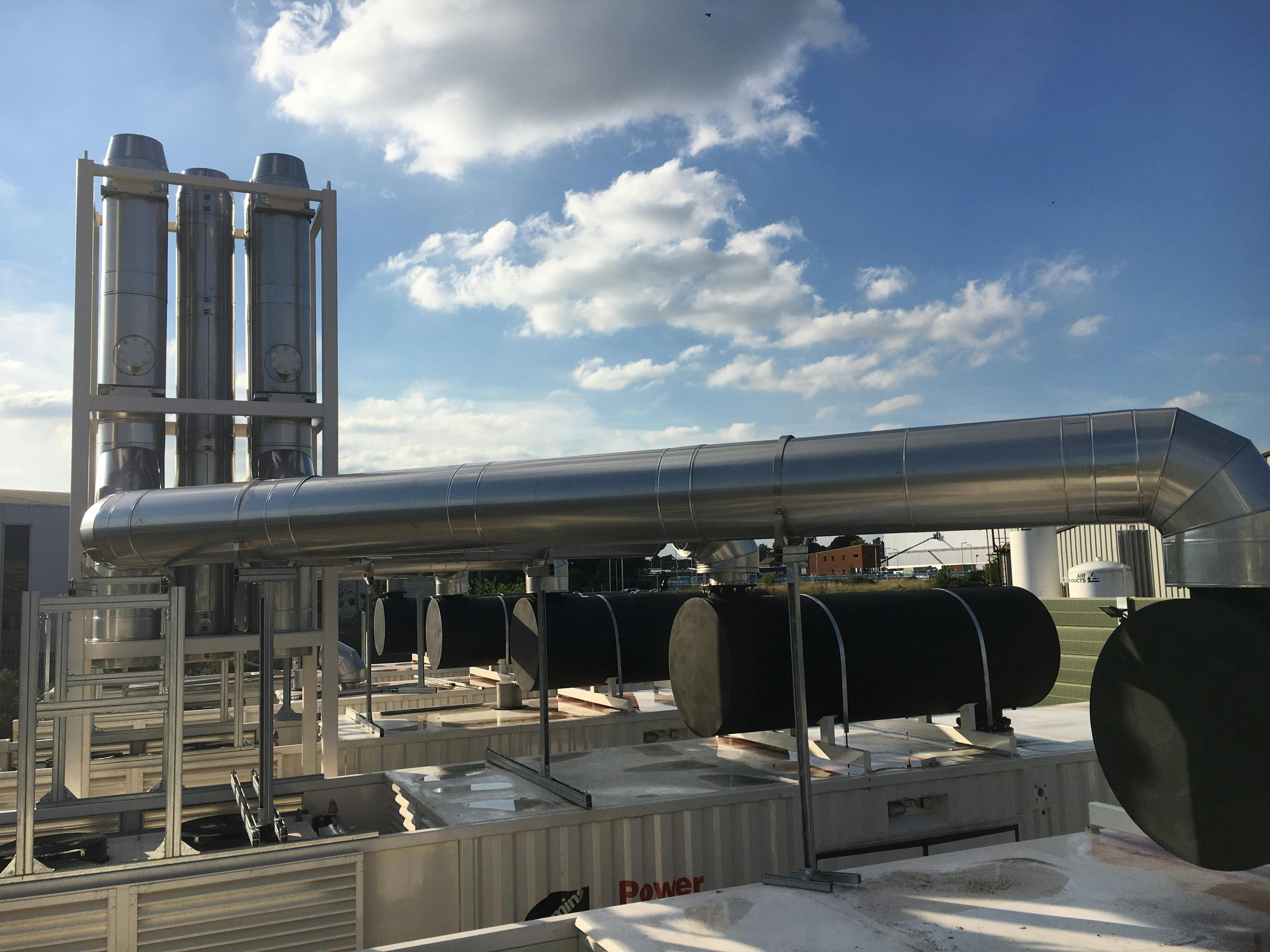
Material Selection Logic in Major Industries
Petrochemical Industry
As the largest application field for storage tanks, material selection in the petrochemical industry is mainly based on the corrosion characteristics of crude oil, refined oil products and chemical media.Carbon steel is the main material for petrochemical storage tanks, with common grades including Q235B and Q345R. It features high strength, relatively low cost and good weldability, making it ideal for storing non-corrosive or slightly corrosive oils. For crude oil and refined oil tanks under normal temperature and pressure, carbon steel is the most economical choice.Low-alloy steels, formed by adding a small amount of alloying elements to carbon steel, offer higher strength and can be used in large tanks to reduce wall thickness. For example, the tensile strength of Q345R is about 30% higher than that of Q235B, allowing thinner wall thickness under the same load and thus saving steel consumption.Stainless steel is mainly used for storing highly corrosive chemical media. Grade 304 stainless steel is commonly used for general organic acids and salt solutions. 316L stainless steel, with added molybdenum, has superior pitting corrosion resistance and is suitable for chloride-containing media. However, stainless steel costs three to five times as much as carbon steel and is generally only considered when other materials cannot meet the requirements.

Food and Pharmaceutical Industry
The food and pharmaceutical industry imposes extremely stringent requirements on storage tank materials, and the core logic of material selection is to ensure product hygiene and safety without any compromise.304 stainless steel is the basic material for this industry due to its good corrosion resistance and polishability. After precision polishing, the inner wall of the tank can achieve a surface roughness of Ra ≤ 0.4 μm. Such a smooth surface effectively prevents bacterial growth and facilitates cleaning.316L stainless steel is more widely used, especially for media containing salt or acid. Its low carbon content (≤ 0.03%) avoids the risk of intergranular corrosion after welding, ensuring long-term safety.Pharmaceutical-grade tanks often require higher standards, with electropolishing to form a dense passive film. Food-grade tanks must comply with relevant food safety standards to ensure no harmful substances migrate from the material to food. For these industries, the logic is clear: prioritize absolute safety even at a higher cost.
Environmental Protection and Water Utilities
The environmental protection and water utilities sector has different characteristics. Wastewater treatment, tap water supply and other fields have a large demand for storage tanks but often limited investment, so material selection needs to balance corrosion resistance and cost.Carbon steel with anti-corrosion coatings is a common solution for wastewater tanks. Carbon steel provides structural strength; the inner wall is coated with anti-corrosion layers such as epoxy resin or glass flakes, and the outer wall with anti-rust paint. This combination is low-cost but has a limited coating life and requires regular maintenance and recoating.Fiberglass-reinforced plastic (FRP) tanks are widely used in small and medium-sized wastewater tanks and chemical reagent tanks. FRP has excellent corrosion resistance and light weight but low stiffness, requiring reinforced design for large tanks.Stainless steel is mainly used for high-demand applications such as drinking water and pure water tanks. 304 stainless steel ensures water quality is not contaminated. Although the initial investment is high, its maintenance-free nature and long service life make it more advantageous in terms of life-cycle cost.
New Energy Industry
The rise of the new energy industry has opened up new application scenarios and unique material selection logic for storage tanks.Lithium battery materials such as lithium carbonate and lithium hydroxide are sensitive to impurities and corrosive, so 316L stainless steel tanks with polished inner walls are usually required to prevent metal ion contamination.The hydrogen energy sector has stricter requirements. High-pressure hydrogen storage tanks must withstand pressures above 70 MPa and resist hydrogen embrittlement, so high-strength alloy steel or carbon fiber composite materials are used. Liquid hydrogen tanks operate at as low as -253°C, requiring austenitic stainless steel or aluminum alloy with efficient insulation systems to minimize cold loss.The biomass energy sector also has special needs. Biodiesel, fuel ethanol and other products are sensitive to metals such as copper and zinc, which may catalyze oxidation reactions. Therefore, tank materials avoid these elements, and carbon steel or stainless steel is commonly used.

Performance Comparison of Common Materials
· Strength: Low-alloy steel and duplex stainless steel have high strength, suitable for heavy-load conditions. Carbon steel and standard stainless steel have medium strength. Aluminum alloy and FRP have relatively low strength, suitable for small and medium-sized tanks.
· Corrosion resistance: Titanium exhibits excellent performance and remains stable in various corrosive environments. Duplex steel and nickel-based alloys also have good corrosion resistance, followed by stainless steel; carbon steel has poor corrosion resistance and requires anti-corrosion measures.
· Low-temperature performance: Austenitic stainless steel and nickel-based alloys maintain good toughness at low temperatures, suitable for cryogenic tanks. Carbon steel undergoes brittle transition at low temperatures and is prone to brittle fracture, so it is not suitable for low-temperature services.
· Cost: Carbon steel is the cheapest, followed by low-alloy steel; stainless steel is more expensive; titanium and nickel-based alloys are costly and only used in special conditions.
Special Application of Titanium Materials
As a representative high-performance material, titanium has unique value in storage tanks.Pure titanium performs excellently in oxidizing media, forming a dense oxide film with self-passivation to resist many highly corrosive media. Titanium-palladium alloy, titanium-nickel-molybdenum alloy and other grades further expand its application in reducing media.In practice, titanium tanks are mainly used in:
· High-temperature, high-pressure and highly corrosive environments in hydrometallurgy;
· Wet chlorine and hypochlorite corrosion resistance in the chlor-alkali industry;
· Seawater corrosion resistance in desalination;
· Organic acid production such as acetic acid and citric acid in fine chemicals.
Titanium is indeed expensive (5–10 times the cost of 316L stainless steel) and requires high welding standards, so it is only chosen when other materials fail. However, for extreme corrosion conditions, its long service life makes it the optimal choice in terms of life-cycle cost.
Conclusion
There is no “best” material for storage tanks, only the most suitable one. By understanding the working conditions and material selection logic of each industry and combining a comprehensive comparison of material properties, the best balance among safety, performance and cost can be achieved to select the most appropriate storage tank material for specific application scenarios.