In the modern industrial system, storage tanks serve as indispensable infrastructure. Liquids, gases, raw materials and finished products all rely on these “industrial containers” for safe and stable storage. Widely deployed across all sectors of the national economy, from heavy chemical industry to urban daily life, storage tanks act as a vital bridge linking production and consumption.
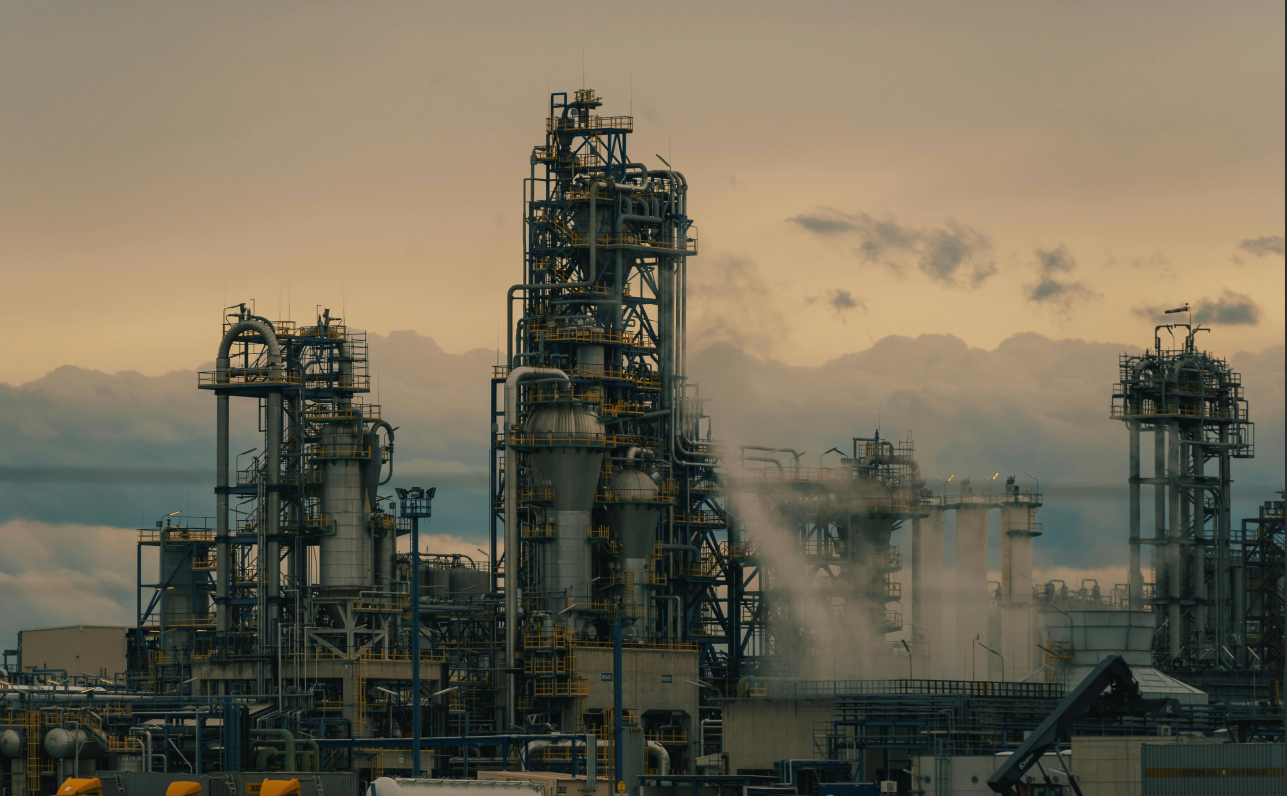
Petrochemical Industry: The Core Application Hub for Storage Tanks
The petrochemical sector represents the largest market for storage tanks, accounting for approximately 38% of global demand. Crude oil extracted from oilfields is stored in large floating roof tanks pending transportation. Gasoline, diesel and jet fuel produced in refineries are stored separately in dome roof tanks or internal floating roof tanks. Basic chemical raw materials such as ethylene, propylene and benzene require spherical tanks or low-temperature storage tanks to accommodate their special physical properties.
At the initial and terminal stations of long-distance transmission pipelines, storage tanks function like regulating reservoirs. Tanks at initial stations collect and stockpile crude oil to stabilize pipeline transportation volume, while terminal tanks receive and reserve incoming oil to ensure continuous supply for end users. China’s primary crude oil processing capacity reaches 956 million tons per year, ranking first worldwide. Such massive refining and chemical output is underpinned by tens of thousands of storage tanks of various types.
Energy Security: Cornerstone of Strategic Reserves
Energy security is a vital part of national strategy, and storage tanks play a stabilizing role in this field. Taking LNG terminals as an example, by the end of 2025, China had put 39 LNG terminals into operation with a total annual receiving capacity of 160 million tons. The national liquid storage capacity of LNG tanks increased from 10.7 million cubic meters in 2020 to 28.68 million cubic meters in 2025, a growth rate of 168%.
China has independently developed the world’s largest ultra-large LNG storage tanks with a capacity of 270,000 cubic meters, with 18 units currently in service, accounting for nearly 70% of the global total of the same type. One such “super energy granary” has a volume equivalent to six standard swimming pools and can store 167.5 million cubic meters of natural gas, meeting the annual gas demand of millions of households. At the Eastern Guangdong LNG Terminal, three newly built membrane tanks provide a total gas storage capacity of 470 million cubic meters, greatly enhancing peak shaving and supply assurance capabilities for the Guangdong–Hong Kong–Macao Greater Bay Area.
Food & Pharmaceutical Industry: Guardian of Hygienic Storage
The food and pharmaceutical industries impose stringent requirements on sanitation, cleanliness and pollution control, and this segment occupies around 14% of overall tank demand.
Stainless steel storage tanks are core equipment in the production of beer, beverages and dairy products. With precisely polished inner walls reaching a surface roughness of Ra ≤ 0.4 μm, these tanks inhibit bacterial growth and are equipped with CIP online cleaning systems to meet strict food hygiene standards. In the refining process of edible oil, multiple storage tanks are used for intermediate transfer and finished product storage.

The pharmaceutical industry sets even more rigorous standards. Tanks for raw pharmaceutical materials, fermentation and liquid preparation are generally made of 316L stainless steel with mirror-polished inner surfaces to comply with GMP regulations. Special medicines also require nitrogen blanketing inside tanks to prevent oxidation and deterioration.
Agriculture & Grain Storage: Linkage from Farmland to Dining Tables
Agricultural demand for storage tanks is mainly driven by grain and oil storage, making up 18% of global tank consumption.
In major grain-producing regions, large steel silos store corn, wheat, soybeans and other crops to guarantee national food security. The edible oil industrial chain relies on a complete range of tanks, including crude oil tanks, refining intermediate tanks and finished oil storage tanks. In major agricultural countries such as Brazil and Argentina, soybean oil storage tanks are essential public infrastructure. In addition, various storage tanks are widely used for the containment and distribution of liquid fertilizers, pesticides and irrigation water in agricultural production.
Environmental Protection & Water Utilities: Guarantee for Urban Operation
Water resource management and environmental protection constitute another key application area for storage tanks. Clear water tanks and elevated water tanks in municipal water supply systems guarantee daily water supply for urban residents. Regulation tanks, sedimentation tanks and sludge storage tanks at sewage treatment plants are essential facilities for wastewater purification.
With increasingly stringent environmental regulations, the storage and treatment of industrial wastewater and waste liquid demand higher-performance tanks. Corrosion-resistant fiberglass reinforced plastic (FRP) tanks and steel-lined plastic tanks are widely adopted in wastewater treatment systems for electroplating, chemical production, printing and dyeing industries.
From petrochemicals to food and pharmaceuticals, from strategic energy reserves to environmental protection and water supply, storage tanks, known as the “king of industrial containers”, support the stable operation and development of all economic sectors through diversified structural forms and continuous technological upgrading. Driven by advances in materials science, intelligent manufacturing and digital technology, storage tanks will expand into more application scenarios, contributing to the development of a self-reliable modern energy system and the global transition toward green and low-carbon development.