During the operation of plate distillation columns, liquid weeping is a common phenomenon that must be strictly controlled. First, it is essential to clarify the definition of weeping: it refers to the condition in which liquid on the tray directly leaks down to the lower tray through openings such as sieve holes, valve ports or gaps in downcomers, without sufficient gas–liquid contact. Weeping reduces the mass transfer efficiency of trays; in severe cases, it deteriorates gas–liquid contact inside the column and lowers product purity. Therefore, understanding the causes of weeping and adopting effective preventive measures is critical to ensuring the efficient and stable operation of distillation columns.

Ⅰ. Causes and Hazards of Liquid Weeping
The fundamental cause of weeping is that the upward supporting force provided by rising gas is insufficient to overcome the combined effects of liquid gravity and surface tension. When the velocity of upward gas is too low or the pressure drop across the tray is too small, liquid will leak downward through the openings.
Slight weeping reduces tray efficiency, as part of the liquid flows to the lower stage without complete mass transfer, forming a fluid short circuit. Severe weeping damages the normal liquid layer accumulation on the tray and even leads to dry trays, resulting in substandard quality of both overhead and bottom products. Long�term weeping also causes uneven tray corrosion and shortens equipment service life.
Ⅱ. Optimization Measures at the Design Stage
1. Reasonable Selection of Tray Types
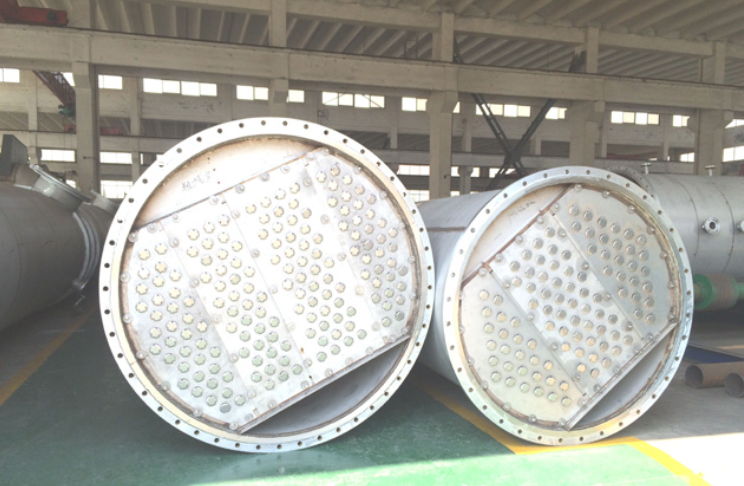
Different trays show varying sensitivity to weeping. Sieve trays feature a simple structure but are prone to weeping under low gas velocity. Float valve trays, with adjustable valve openings that automatically adapt to gas volume, maintain reliable sealing over a wide load range and deliver strong anti�weeping performance. For working conditions with fluctuating operating loads, float valve trays are the preferred option.
2. Optimization of Opening Ratio and Hole Diameter
The opening ratio is a key parameter affecting weeping. An excessively high opening ratio reduces gas velocity through holes and weakens the supporting force of gas, easily triggering weeping. Conversely, an overly low opening ratio increases pressure drop and may cause liquid entrainment. In engineering design, a reasonable opening ratio shall be determined according to operating gas velocity, generally controlled between 5% and 15% for industrial columns. Properly reducing the hole diameter can raise gas flow velocity, while the risk of blockage must be fully balanced.
3. Configuration of Appropriate Weir Height
The overflow weir height determines the liquid layer thickness on the tray. A thicker liquid layer increases liquid static pressure and aggravates weeping, while an excessively thin liquid layer impairs mass transfer performance. The weir height shall be determined based on material properties and gas–liquid load, with a conventional range of 40 mm to 80 mm.
Ⅲ. Control Strategies at the Operation Stage
Standardized operation is vital to prevent weeping in actual production.
1. Stabilize Vapor Load within the Designed Range
Insufficient gas velocity is the most direct cause of weeping. The operating load of the column shall not be lower than the design lower limit, generally maintained above 60%–70% of the rated load. For low�load operation, measures such as reducing overhead withdrawal or increasing the reflux ratio can be adopted to boost upward vapor flow.
2. Maintain Stable Operating Pressure
Fluctuations in column pressure directly affect the volumetric flow rate of gas. A sharp pressure drop causes gas expansion and a decline in linear velocity, easily inducing weeping. Dramatic and rapid pressure adjustments should be avoided to keep the column pressure stable.
3. Prevent Excessive Liquid Accumulation
An over�thick liquid layer on the tray raises the static liquid head and intensifies weeping. Operators shall reasonably control the reflux ratio and feed volume to prevent abnormal liquid accumulation caused by downcomer flooding.
Ⅳ. Key Points for Maintenance and Inspection
1. Regular Inspection of Tray Corrosion and Wear
After long�term operation, corrosion may enlarge sieve holes and valve ports on trays, lowering gas velocity and aggravating weeping. During maintenance, hole dimensions shall be measured, and damaged trays or valve pieces shall be replaced in a timely manner.
2. Removal of Blockages
For scaling�prone media or materials containing solid particles, partial blockage of tray openings reduces the actual opening ratio, resulting in excessive local gas velocity in unblocked areas and insufficient gas flow in other regions, which triggers partial weeping. Regular cleaning is required to keep all openings unobstructed.
3. Verification of Tray Levelness
Trays must be installed horizontally. Inclined trays lead to overly thick liquid layers in low-lying areas that cause weeping, and ultra-thin liquid layers in high areas that weaken mass transfer. The levelness of all trays shall be rechecked after each major maintenance to meet specification requirements.
Liquid weeping is an unavoidable risk in the operation of plate distillation columns. The occurrence of weeping can be effectively restrained through reasonable type selection and parameter optimization in the design phase, stable load control and standardized operation, as well as routine inspection and timely maintenance. Only by implementing proactive prevention can the distillation column operate under optimal working conditions, ensuring stable production and high�purity finished products.