Tower equipment is the core facility for realizing gas-liquid mass transfer processes. Alongside plate towers in industrial production, packed towers represent another major and widely applied tower type. Featuring an ingenious internal structure and unique hydrodynamic characteristics, packed towers occupy an irreplaceable position in numerous production scenarios. Today, we will explore the core advantages of packed towers.
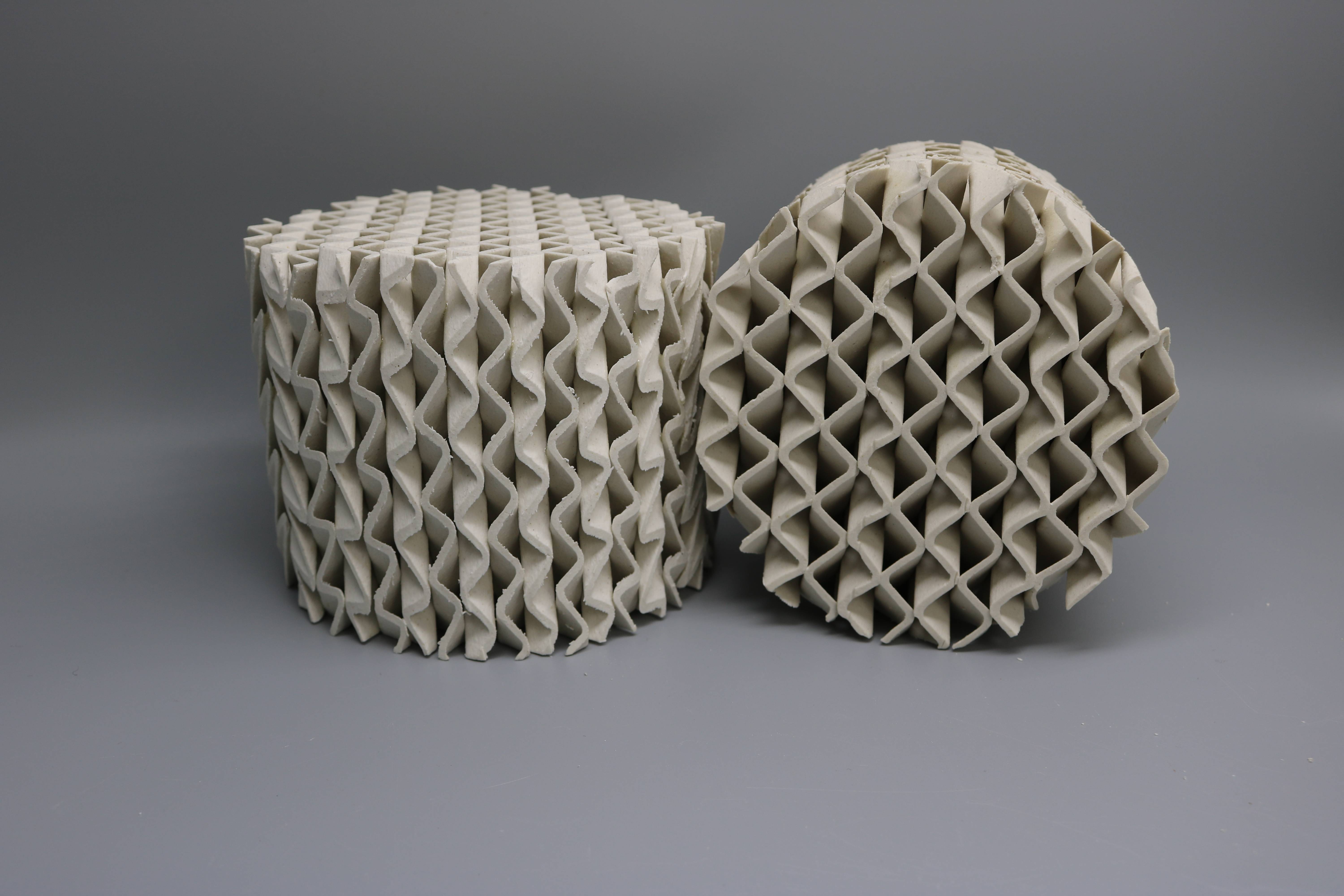
The structure of a packed tower is relatively simple. The tower cylinder is filled with packing at a certain height. Liquid is sprayed from top to bottom and forms a thin liquid film on the packing surface; gas flows upward and achieves mass transfer through contact with the wetted packing. Common packing materials fall into two categories: random packing (such as Raschig rings, Pall rings and cascade mini rings) and structured packing (such as corrugated plate packing). This structural design endows packed towers with a series of distinctive performance strengths.

Advantage 1: Low Pressure Drop, a Model for Energy Saving
One of the most prominent merits of packed towers is the extremely low gas pressure drop, far lower than that of plate towers.
In plate towers, gas must pass through the liquid layer on each tray, generating continuous pressure loss at every stage. In packed towers, gas flows tortuously between liquid films on packing surfaces without the static pressure resistance of accumulated liquid layers. Structured packing further optimizes flow channels to deliver even lower pressure drop.
Under identical separation requirements, packed towers operate at a lower overhead pressure, reducing the heat load of the reboiler and the cooling capacity consumption of the overhead condenser, thereby achieving remarkable energy savings. Especially in vacuum distillation, the low pressure drop allows separation at a lower kettle temperature, effectively preventing the decomposition and polymerization of heat-sensitive materials.
Advantage 2: High Mass Transfer Efficiency and Excellent Separation Performance
Packed towers deliver superior mass transfer efficiency by providing an enormous specific surface area for gas-liquid contact. One cubic meter of structured packing can offer hundreds of square meters of contact area. Liquid spreads evenly into an ultra-thin film, enabling full and intimate contact with rising gas.
This liquid-film contact mode minimizes mass transfer resistance and greatly boosts separation capacity. The theoretical plate number per meter is significantly higher than that of plate towers. For precision separation and high-purity production requirements, packed towers can achieve ideal separation results with a shorter overall tower height.
Advantage 3: Low Liquid Hold-Up, Ideal for Heat-Sensitive Materials
Liquid hold-up — the total volume of retained liquid inside the tower — in packed towers is much smaller than in plate towers. Plate towers maintain a fixed liquid inventory on each tray to ensure stable operation, while liquid in packed towers mainly exists as thin surface films with limited total volume.
This feature is critical for processing heat-sensitive substances. Low hold-up shortens material residence time inside the tower and greatly reduces risks of thermal decomposition and side reactions. Meanwhile, for batch distillation and multi-component switching production, low liquid hold-up enables faster product changeover, fewer transition fractions, and higher production efficiency and product yield.
Advantage 4: Strong Corrosion Resistance and Flexible Material Selection
With no complex moving mechanical components and a wide range of optional packing materials, packed towers excel in corrosion resistance. For highly corrosive media, ceramic or plastic packing (such as polypropylene and PTFE) can be adopted to completely avoid metal corrosion.
Ceramic packing provides outstanding acid resistance, while plastic packing maintains stable performance in alkaline and organic acid environments. Although plate towers can also adopt corrosion-resistant metals such as stainless steel, they are often restricted by high processing costs and structural strength, making it difficult to fully resist harsh corrosive conditions. Such flexible material selection makes packed towers the optimal choice for treating strongly corrosive media.
Advantage 5: Cost-Effective for Small-Diameter Towers
Packed towers present distinct economic advantages for small-diameter vessels (generally below 800 mm).
Small-size plate towers face great manufacturing difficulties, as tray installation and manhole arrangement are severely limited by narrow space, resulting in high unit manufacturing costs. In contrast, packed towers feature a simple structure with direct packing filling, easy fabrication and lower investment. They serve as the most cost-effective solution for laboratory tests, pilot plants and small-batch fine chemical production.
Advantage 6: Excellent Anti-Foaming Performance
Certain process systems tend to generate excessive foam during gas-liquid contact, causing severe entrainment and even flooding, which seriously undermines mass transfer efficiency and operational stability.
Packed towers perform exceptionally well with foaming media. Liquid flows downward in the form of thin films rather than undergoing violent bubbling as in plate towers, which fundamentally inhibits foam formation. Even if a small amount of foam appears, the irregular surfaces of packing elements help break bubbles rapidly. This unique adaptability enables packed towers to stably handle foaming process systems.
With the core strengths of low pressure drop, high mass transfer efficiency, low liquid hold-up, outstanding corrosion resistance, cost efficiency for small diameters and superior anti-foaming ability, packed towers play a vital role in vacuum distillation, heat-sensitive material separation, fine chemical production and harsh corrosive medium treatment.