In the field of food processing, the reactor serves not only as a vessel for mixing and reaction, but also as a guardian of taste and safety. Due to the particularity of the food industry, the selection of equipment such as reactors follows far stricter standards than ordinary chemical machinery.
Challenge 1: Hygiene and Safety with Zero Compromise
Hygiene and safety stand as the primary bottom line in food production. Issues that may exist in ordinary industrial equipment, such as trace heavy metal precipitation, dirt accumulation in dead welding seams, and aging or shedding of sealing components, are regarded as fatal defects in food manufacturing. If equipment cleaning is incomplete, residual protein, sugar, grease and other substances will become breeding grounds for microorganisms, which may lead to product deterioration in mild cases and serious food safety incidents in severe situations.
Solution: Full Sanitary Optimization from Material to Structure
Food-grade reactors adhere to the principle of hygiene first throughout the design phase.In terms of materials, 316L stainless steel is widely adopted. This molybdenum-containing austenitic stainless steel delivers superior corrosion resistance compared with ordinary steel, effectively resisting erosion by acids, alkalis and salts commonly used in food processing and preventing food contamination by metal ions.
In structural design, all internal surfaces in direct contact with food are precisely polished, with the surface roughness (Ra) controlled below 0.4 micrometers to achieve mirror-level smoothness. Such a seamless surface leaves no hiding places for bacteria and allows thorough cleaning with simple flushing.All welding seams adopt automatic orbital welding and secondary polishing, making the welded area integrated with the base metal and eliminating tiny gaps that may trap residual materials.Meanwhile, the kettle bottom adopts a residue-free conical or eccentric design to ensure complete discharging without dead volume.The sealing system is upgraded to sanitary mechanical seals or sterile diaphragm seals, completely blocking external contamination.
Challenge 2: Gentle Processing for Heat�Sensitive Materials
Food processing involves a wide variety of raw materials: milk is prone to coking under high temperature; fruit juice loses freshness after prolonged heating; probiotics will deactivate at excessive temperatures; chocolate requires precise temperature control to form a stable crystal structure.The crude heating mode of traditional reactors easily causes local overheating, resulting in material denaturation, coking, and damage to natural flavor and nutritional ingredients.
Solution: Gentle and High�Efficiency Heat Exchange Technology
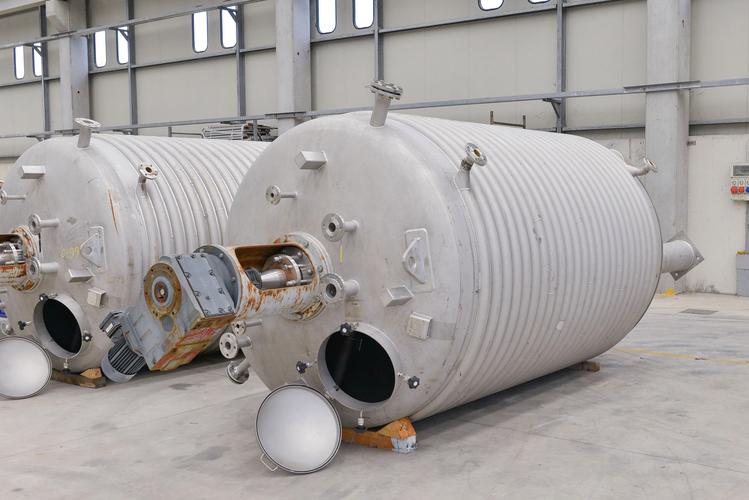
For heat-sensitive materials, modern food reactors are equipped with honeycomb jacket structures. The inner wall of the jacket is covered with regular concave pits or half-pipe structures, which force the heating medium to form turbulent flow and increase heat transfer efficiency by 30% to 50% compared with conventional jackets.This allows the heating medium temperature to be set close to the target value, realizing mild and rapid heating and minimizing the loss of heat�sensitive nutrients and active ingredients.
High�viscosity foods such as jam, chocolate and condensed milk face another major difficulty — poor heat transfer. With low fluidity, materials near the kettle wall are highly susceptible to overheating and coking.Targeted stirring configurations are adopted to solve this problem:
· Anchor agitators closely scrape the kettle wall to continuously peel off overheated materials and mix them into the main body;
· Frame agitators matched with scraping plates realize all-round uniform heat exchange;
· Special high�viscosity agitators adopt optimized hydrodynamic design to drive full material circulation and maintain consistent temperature inside the tank.
Challenge 3: Difficult Cleaning and Low Production Switching Efficiency
Food factories often produce products with different formulas and flavors on the same production line. Thorough cleaning is mandatory when switching production, such as from strawberry jam to blueberry jam or from dairy drinks to plant�based beverages, to avoid cross contamination.Traditional manual disassembly and cleaning is time-consuming and labor-intensive with unstable cleaning results, greatly restricting overall production efficiency.
Solution: CIP (Cleaning in Place) System
Modern food reactors are generally integrated with CIP systems. Multiple dedicated spray balls are pre-installed inside the tank. Cleaning fluid, acid solution, alkali solution, disinfectant and rinsing water are automatically sprayed to every corner following programmed procedures, achieving thorough cleaning through mechanical scouring and chemical disinfection.The entire process requires no manual entry into the reactor, saving labor and time. Meanwhile, the cleaning effect is stable, verifiable and fully compliant with food safety management system standards.
From raw materials to finished delicacies, reactors act as the most critical guardian along the invisible production chain.316L stainless steel ensures production purity and food safety;honeycomb jackets retain the original taste and nutrition of ingredients;intelligent CIP systems guarantee batch-to-batch hygiene;and precise automatic control maintains consistent flavor and product quality.