As an indispensable heat transfer equipment in chemical, petroleum, electric power and other industries, the installation quality of tubular heat exchangers directly determines operational efficiency and safe production. The installation process involves multiple procedures including foundation acceptance, shell assembly, heat exchange tube installation and sealing commissioning. Affected by various factors, various defects are likely to occur. This article summarizes common problems during installation and puts forward targeted solutions.

Problem 1: Foundation Installation Deviation
Foundation deviation is most likely to occur in the initial installation stage. Main manifestations include unqualified foundation elevation, levelness and coaxiality, as well as offset reserved holes. Such problems cause uneven stress on the heat exchanger shell, which may lead to shell deformation, tube abrasion and sealing failure during long-term operation. In severe cases, it will also impair the flow stability of tube-side and shell-side media.
Solution 1
Complete foundation acceptance before installation. Check foundation dimensions, elevation and reserved hole positions in strict accordance with design drawings. Use levels, theodolites and other tools to inspect levelness and coaxiality, and keep all deviations within specification limits.Minor deviations can be corrected by cushion plates, which shall be placed in layers and stressed evenly in accordance with standards. For major deviations, chipping, repairing or reworking of the foundation is required. The equipment can only be positioned after the foundation fully meets installation requirements.
Problem 2: Sealing Leakage
Sealing leakage frequently occurs in the later installation stage, mainly at the joints between tubesheet and shell flange, channel cover and shell, as well as the sealing surfaces between heat exchange tubes and tubesheets. The main causes include improper sealing material selection, uncleaned sealing surfaces and uneven bolt tightening torque.Leakage not only reduces operating efficiency, but also may trigger safety accidents due to the escape of flammable, explosive or corrosive media.
Solution 2
Select gaskets and sealing parts with appropriate specifications and materials according to medium properties, working pressure and temperature to prevent aging and corrosion failure.Thoroughly clean sealing surfaces before installation to remove oil stains, rust and impurities, ensuring flat and smooth contact surfaces. When tightening bolts, use torque wrenches in a symmetrical and crosswise sequence with graded fastening, and control the torque within the designed range to avoid poor fitting caused by uneven local stress.After installation, conduct hydrostatic test and air tightness test to verify sealing performance. Replace damaged gaskets, retighten bolts or repair sealing surfaces immediately once leakage is found.
In addition, other common defects include improper support installation, shell deformation and substandard thermal insulation construction.Unqualified support installation leads to uneven equipment stress. Supports shall be installed strictly in line with design requirements with unified elevation and firm fixation.Shell deformation is mainly caused by improper hoisting or foundation errors. Professional lifting tools and designated lifting points must be adopted to prevent structural distortion.Unqualified thermal insulation construction results in excessive heat loss. Use qualified insulation materials and construct in strict compliance with codes to ensure uniform thickness, tight fitting and intact surface without damage.
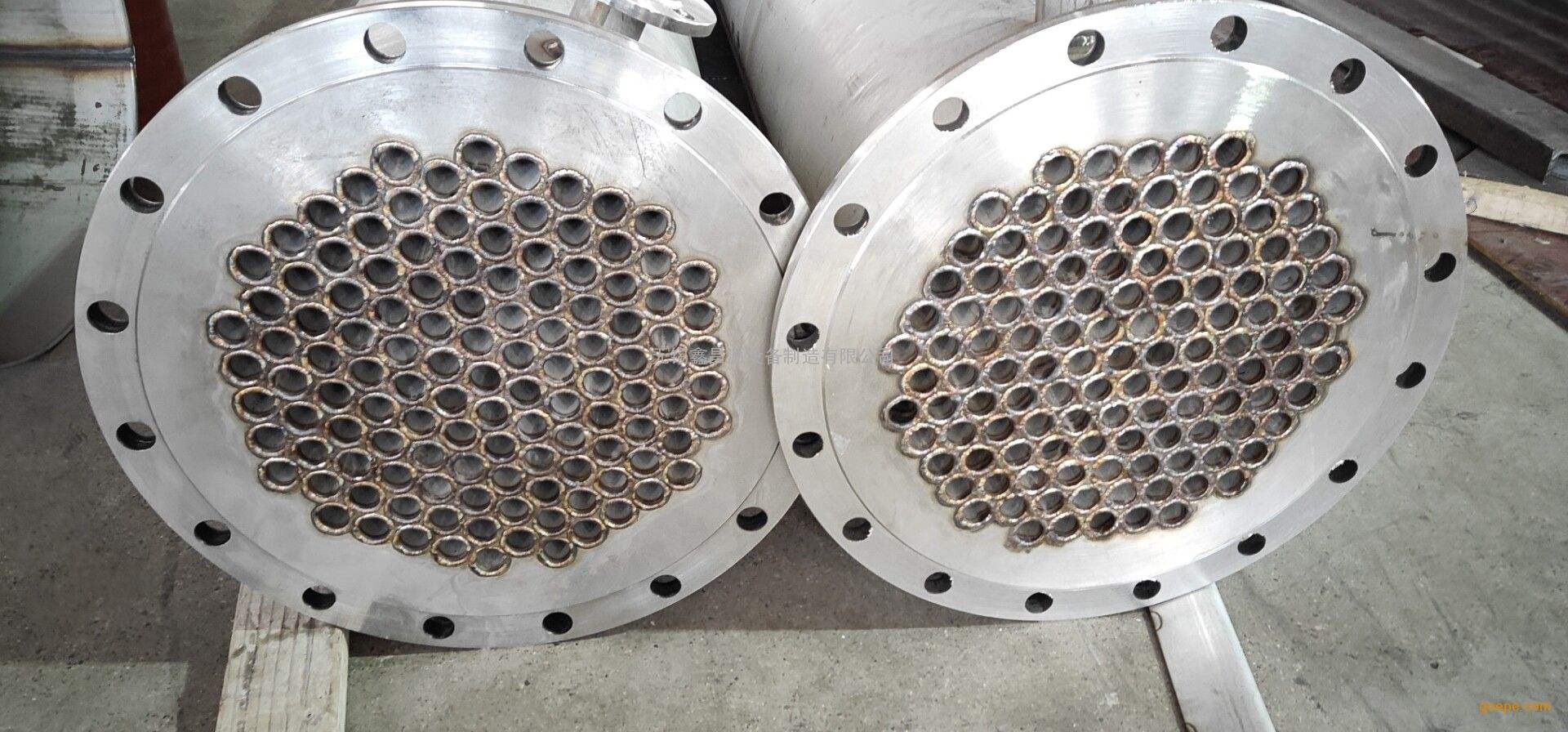
The installation of tubular heat exchangers is a systematic and highly professional project. During construction, it is essential to comply with design specifications and construction procedures, strengthen personnel professional training, and implement full-range inspection and acceptance for every process. Only in this way can stable installation quality be guaranteed, enabling long-term, stable and high-efficiency operation of heat exchangers.
The above illustrates the potential problems and corresponding solutions in the installation of tubular heat exchangers.Shanghai Rivbay Chemical Equipment Co., Ltd. specializes in the R&D and production of non-standard pressure vessels, such as reaction kettles, heat exchangers, stainless steel reaction kettles, tower vessels, modular equipment, freeze dryers and cold traps. The company holds ASME U Stamp Certificate, EU PED certification, Korea Kosha certification and EAC certification of the Eurasian Economic Union. Its products are widely used in chemical, petrochemical, fine chemical, pharmaceutical, food, light industry, environmental protection and other fields. We provide customized high-matching equipment solutions for customers. Warmly welcome your inquiries.