With breakthroughs in material science and leaps in manufacturing technology, plate�fin heat exchangers have been developed to pursue higher heat transfer efficiency compared with traditional tubular and plate heat exchangers.
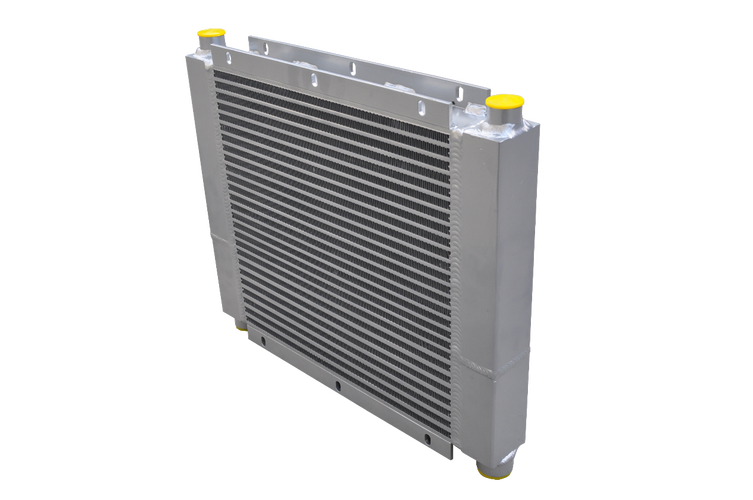
This article focuses on analyzing the advantages, disadvantages and application scenarios of platefin heat exchangers. Performance is inherently determined by structure. The core structure of a plate�fin heat exchanger consists of delicate, intricately shaped thin fins brazed between two parallel partition plates to form numerous micro flow channels. Countless identical plate-fin-plate units are stacked and combined into an integrated, rigid core. Thanks to this unique structure, its specific surface area easily reaches 1,000–2,500 ㎡/m³.
By comparison, the specific surface area of shell-and-tube heat exchangers is generally below 100 ㎡/m³, and that of plate heat exchangers ranges from 150 to 250 ㎡/m³. In other words, a plate-fin core the size of a briefcase can deliver heat exchange capacity equivalent to a shell-and-tube unit as large as a refrigerator. All components of plate-fin heat exchangers are integrated by high-temperature vacuum brazing, forming a rigid honeycomb monolith with extensive internal supporting structures.
This design delivers exceptional pressure resistance and fatigue strength per unit weight. It can withstand high-pressure working conditions such as aircraft engine bleed air systems, and reliably resist drastic temperature cycling and mechanical vibration. Under the same heat load, its weight is only a fraction of that of conventional heat exchangers. Compared with plate heat exchangers, the complex porous fin structure thoroughly disrupts the laminar boundary layer and generates intense three-dimensional turbulence. Together with ultra-thin fins (0.1–0.3 mm in thickness) and partition plates with extremely low thermal resistance, the overall heat transfer coefficient is remarkably high. It performs outstandingly for media with poor heat transfer properties such as gases and cryogenic fluids, and effectively reduces heat transfer temperature differences. Therefore, it is widely adopted in fields with strict limits on weight and space, including aerospace, marine vessels and submarines. Nevertheless, plate�fin heat exchangers also have critical inherent drawbacks:
1. Poor Anti-Clogging Performance and Strict Purity Requirements Micron-scale flow channels are the source of its high efficiency yet also its major weakness. Tiny solid particles, moisture, oil contamination and even microcrystalline impurities can cause local or full blockage. Incoming fluids must undergo deep filtration and rigorous purification, meeting ppb-level standards for particulate matter, oil content and dew point. It is completely incompatible with fluids containing solid particles, viscous substances or coking and polymerizing media.
2. Non-Repairable Structure and High Failure Costs Plate-fin heat exchangers are permanently brazed into a sealed integral structure with fully enclosed flow passages, making physical cleaning and internal repair nearly impossible. In cases of internal leakage between fluid channels, severe corrosion or complete blockage, on-site maintenance is not feasible, and core replacement is the only solution. This irreversible failure feature leads to high operating risks and replacement costs, requiring ultra-high standards in design, manufacturing quality and daily operation management.
3. High Manufacturing Costs and Complex Process Technology Its core production process, high-temperature vacuum brazing, requires precise temperature control in high-temperature vacuum furnaces with high technical barriers. Premium materials such as aluminum alloy, stainless steel and titanium alloy, as well as customized fin molds, further increase production expenses. Meanwhile, flow channel layout, distributor design and structural strength calculation involve complex simulation analysis and professional expertise, resulting in high unit prices. It is mainly applied in high-end sectors that prioritize extreme performance over cost.
4. Corrosion Sensitivity of Special Materials, Especially Aluminum Alloys Aluminum alloy plate-fin heat exchangers, widely used in air separation and natural gas liquefaction, are highly susceptible to corrosion caused by moisture and acidic media such as carbon dioxide and hydrogen sulfide. Trace moisture may freeze and block channels under low temperature or trigger electrochemical corrosion and tube perforation. Accordingly, highly reliable upstream drying and purification systems are mandatory for stable long-term operation.