Tubular heat exchangers are among the most widely used heat exchanger types and have long been applied extensively in industrial manufacturing. Nevertheless, with the emergence of new-generation heat exchangers, the market share of tubular heat exchangers has declined significantly. What are the advantages and disadvantages of traditional tubular heat exchangers in comparison with emerging alternatives? This article conducts an in-depth analysis of their core strengths and weaknesses, and reveals their dialectical value within the modern industrial system.
I. Core Advantages of Tubular Heat Exchangers
First, let’s look at the structure of tubular heat exchangers. A typical shell-and-tube heat exchanger consists of key components: a cylindrical shell, tube bundle, tubesheet, and channel head. This design delivers multiple critical performance benefits.
The cylindrical shell is one of the most pressure-optimized geometric shapes. Paired with thick tube walls and mature manufacturing processes, tubular heat exchangers easily handle extreme pressures of dozens or even hundreds of megapascals, as well as high-temperature conditions up to several hundred degrees Celsius. For example, in synthetic ammonia or high-pressure hydrocracking units, core heat exchangers must operate stably long-term in high-pressure hydrogen environments and temperatures exceeding 300 °C.
The tubular structure is almost the only reliable choice. Since the internal tube bundle can be made from a different material than the shell, tubular heat exchangers offer great material flexibility. For instance, Rivbay Chemical often uses stainless steel, titanium, or even Hastelloy tubes to resist corrosive media, while the shell uses lower-cost carbon steel. This material combination greatly expands the application range of tubular heat exchangers. For the application of titanium in tubular heat exchangers
please refer to: https://www.rivbay1958.com/news-d.html?article_id=48 At the same time, its rugged structure provides higher tolerance for trace solid particles or scaling-prone substances in fluids, making it less prone to clogging or rapid failure due to thermal stress.
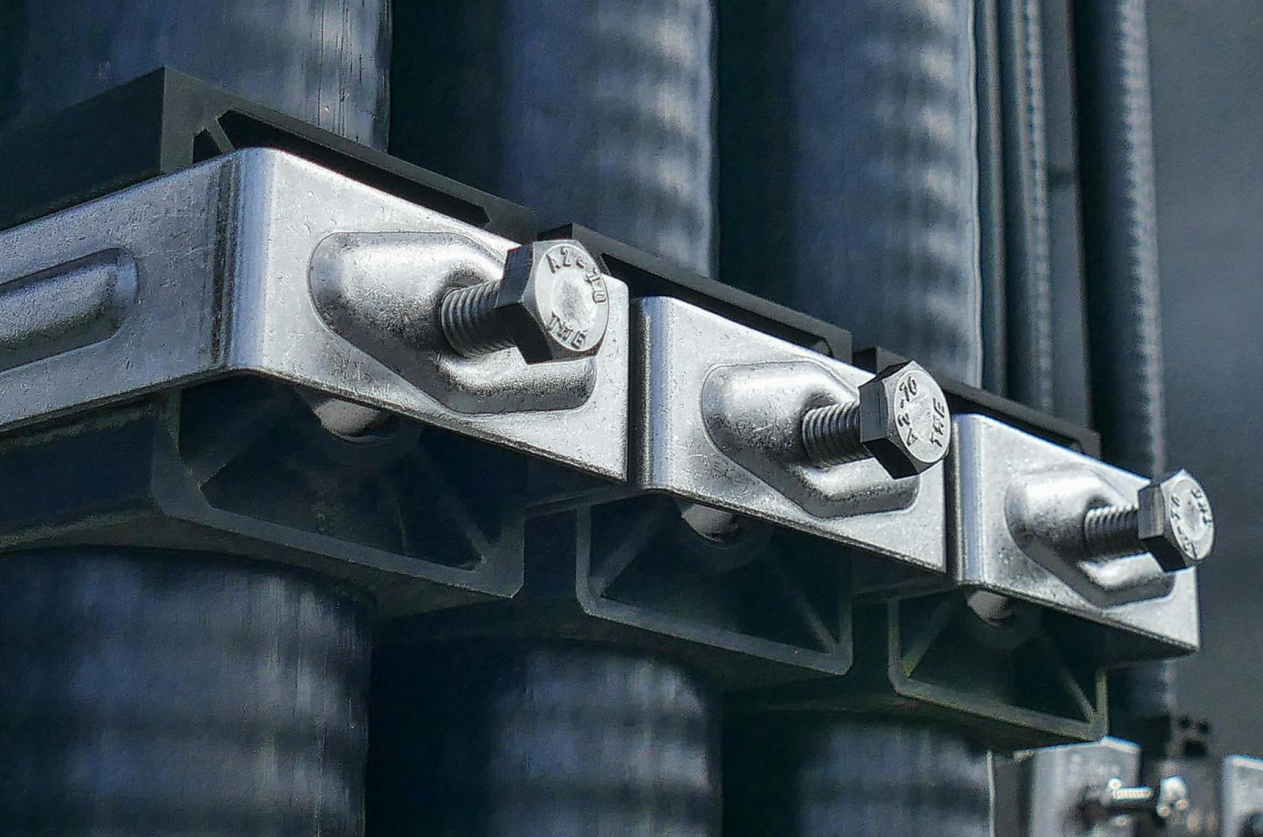
In addition to the above advantages, tubular heat exchangers are well-established products with a long market history. With over a century of engineering practice, they feature highly sophisticated and standardized design, manufacturing and inspection specifications. The maintenance process is clear and systematic: in case of scaling or leakage on the tube side, the entire tube bundle can be extracted for mechanical cleaning, tube plugging or even integral replacement. The classic floating head design adopted by Rivbay Chemical allows free thermal expansion of the tube bundle, effectively eliminating thermal stress issues. As a mature and proven heat exchanger type, it delivers high operational reliability and controllable maintenance costs for industrial facilities that require long-term continuous operation, with a maintenance cycle lasting three to five years.

II. Disadvantages of Tubular Heat Exchangers
Correspondingly, the drawbacks of tubular heat exchangers also stem directly from their fundamental design principles. The primary limitation is their relatively low heat transfer efficiency and large volume and weight. Fluids flowing inside straight round tubes mostly exhibit laminar or low-turbulence flow, and the heat transfer area-to-volume ratio is typically low (below 100 ㎡/m³). As a result, the overall heat transfer coefficient is much lower than that of plate or plate-fin heat exchangers. To achieve the same heat duty, tubular heat exchangers usually require a larger heat transfer area, leading to bulky equipment, excessive weight, high material consumption, and relatively high initial capital investment. These shortcomings make them difficult to apply on space-constrained platforms such as offshore oil and gas platforms.
In daily operation, multiple baffles must be installed to improve the heat transfer efficiency of tubular heat exchangers. However, this creates two problems: first, it causes flow dead zones and bypass streams, reducing effective heat transfer; second, it increases shell-side pressure drop, requiring higher pumping power and leading to higher energy consumption during long-term operation.
Furthermore, since tube bundles and shells may be made of different materials, temperature differences must be carefully controlled. Otherwise, severe thermal stress can cause leakage or structural damage, limiting their use in conditions with drastic temperature fluctuations. In terms of cleaning, although tube bundles can be extracted, cleaning internal tube walls (especially small-diameter tubes) and shell-side spaces remains a time-consuming, costly, and labor-intensive task. For scaling-prone fluids, frequent shutdown cleaning will seriously disrupt production continuity. Once manufactured, the heat transfer area of a tubular heat exchanger is nearly fixed.
When facing process expansion or modification needs, its flexibility is far inferior to plate heat exchangers, whose plate count can be easily adjusted. This concludes the analysis of the advantages and disadvantages of tubular heat exchangers. For the later-stage maintenance of tubular heat exchangers, please refer to: https://www.rivbay1958.com/news-d.html?article_id=49 Shanghai Rivbay Chemical Equipment Co., Ltd. specializes in the R&D and production of non-standard pressure vessels including reaction kettles, heat exchangers, stainless steel reaction kettles, towers, modular units, freeze dryers, and cold traps. The company holds ASME U Stamp, EU PED certification, South Korea Kosha certification, and Eurasian Economic Union EAC certification. Its products cover chemical, petrochemical, fine chemical, pharmaceutical, food, light industry, environmental protection and other fields, and can provide customized, highly compatible equipment solutions for customers. Welcome to contact us for inquiries!