As the "heart" of the modern chemical industry, the operational status of a reaction kettle directly determines the continuity of the production process, the quality of products, and the fundamental operational safety. Long-term service in harsh environments involving high temperatures, high pressure, corrosive media, and mechanical stress inevitably leads to the gradual accumulation of various types of damage. Systematically understanding the common damage types of reaction kettles is a fundamental prerequisite for implementing preventive maintenance, formulating scientific repair strategies, and ensuring production safety and economic benefits. The following will conduct an in-depth analysis of several major categories of typical damage to reaction kettles, providing a clear "damage identification map" for equipment managers and operators.
1. The Mark of Chemical Erosion: Corrosion Damage (Most Common and Diverse) Corrosion is the most universal and persistent threat to reaction kettles, manifesting in various forms with varying degrees of harm. 1. Uniform Corrosion: Like the "erosion of time," it is characterized by the thinning of the entire inner wall or a large area of metal at a relatively uniform rate. Usually caused by the comprehensive chemical action of media (such as acids and alkalis). Although its progression is predictable, failure to monitor wall thickness through ultrasonic thickness measurement regularly may result in severe risks of insufficient pressure-bearing capacity once the thinning exceeds the design margin.

2. Localized Corrosion: More concealed and highly hazardous Pitting Corrosion: Under the effect of specific ions such as chlorides, the local passive film on the surface of passive metals including stainless steel is damaged, forming deep pit cavities. Pitting features small openings and deep internal cavities, which easily cause equipment perforation. Hard to be detected, it is a major cause of sudden medium leakage. Crevice Corrosion: It occurs in stagnant areas such as flange gasket joint surfaces, bolt clearances, and incomplete weld penetration positions. The concentration difference of medium components inside crevices intensifies electrochemical corrosion, bringing far greater damage than that on exposed metal surfaces. Galvanic Corrosion: When two dissimilar metals (e.g., stainless steel stirring paddles and carbon steel kettle bodies) are in direct contact in an electrolyte environment, the metal with a lower potential (anode) will suffer accelerated corrosion. This type of corrosion commonly appears on base materials exposed by damaged non-metallic coatings and joints of different materials.
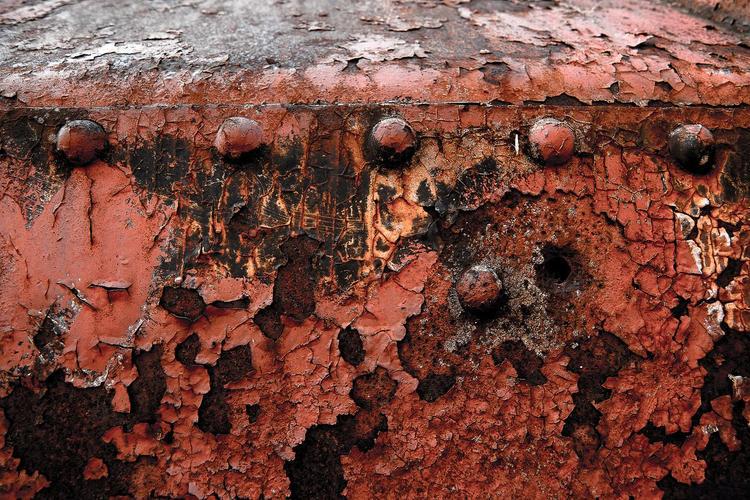
3. Special Forms of Corrosion: Intergranular Corrosion: For stainless steel, improper heat treatment or welding leads to chromium depletion at the grain boundaries, causing corrosion to propagate along them. The material may appear intact, but its strength and toughness are completely lost; it shatters upon light tapping, posing severe hazards. Stress Corrosion Cracking (SCC): Brittle cracks are generated under the combined action of tensile stress (residual stress, working pressure) and specific corrosive media (such as chloride ions for austenitic stainless steel and alkali liquor for carbon steel). Cracks develop rapidly, often resulting in sudden failure without obvious prior signs.
Trauma from Physical and Mechanical Actions: Mechanical and Thermal Damage Such damage directly stems from physical forces or energy.
1. Mechanical Damage: Hard Impact and Scratches: Dropping tools, scraping during stirring, or using improper tools for cleaning can cause pitting and scratches on the inner wall. These defects not only damage the surface protective layer (e.g., passive film, enamel) but also act as initiation points for corrosion and potential sources of stress concentration. Abrasion and Erosion: High-speed stirring of slurries containing solid particles, or the material inlet facing the kettle wall, can lead to local thinning due to continuous erosion, similar to the "water drop wears away stone" effect. Fatigue Cracks: Cracks that initiate and propagate at structural discontinuities (e.g., nozzle roots at openings, welds) under alternating loads (such as periodic pressurization/depressurization, temperature difference changes during startup/shutdown, vibration). This is a key damage type to be inspected for long-operating equipment.
2. Thermal Damage: Overheating and Oxidation: Local temperatures far exceeding the design value may cause changes in the material's metallographic structure, degradation of mechanical properties (e.g., overheating of stainless steel), or accelerate the formation and spalling of oxide scale. Thermal Stress Cracking: During rapid heating or cooling (thermal shock), enormous thermal stress is generated due to uneven expansion or contraction of various parts of the kettle body, which may cause brittle materials (e.g., glass-lined layers) to burst or weld cracks in metal components.. Failure of
Protective Layers: Lining and Coating Damage For reaction kettles with non-metallic linings, the integrity of the lining is the first line of defense.
1. Damage to Glass/Enamel and Ceramic Coatings: Chipping/Spalling: This is the "fatal injury" of glass-lined kettles. Rapid heating and cooling, mechanical impact, or manufacturing defects can all cause the glass glaze to chip and fall off. Once the metal substrate is exposed, corrosion will proceed at high speed, leading to rapid perforation. Damaged areas usually have clear boundaries, showing "shell-like" chipping.
2. Damage to Rubber/Plastic Linings: Bubbling, Delamination, and Perforation: Usually caused by bonding failure between the lining and the steel shell, medium penetration, or high-temperature-induced aging. Bubbling means the lining has lost its pressure-bearing capacity and is very likely to rupture during subsequent operations.
Weak Points of Connections and Seals: Damage to Sealing Systems and Connection Parts Although small, these parts are high-frequency areas for leaks.
1. Mechanical Seal Damage: Wear or cracking of the end faces of the moving and stationary rings due to poor lubrication, particle intrusion, or dry friction; aging, compression set, or chemical corrosion of sealing rings (O-rings, bellows).
2. Leakage at Flange and Nozzle Parts: Pitting and scratching on the flange sealing surface due to corrosion; loosening of bolts due to stress corrosion or creep; cracks or corrosion thinning on the nozzle fillet welds.